
Review of Rosetta Stone language learning products

 Share/Save
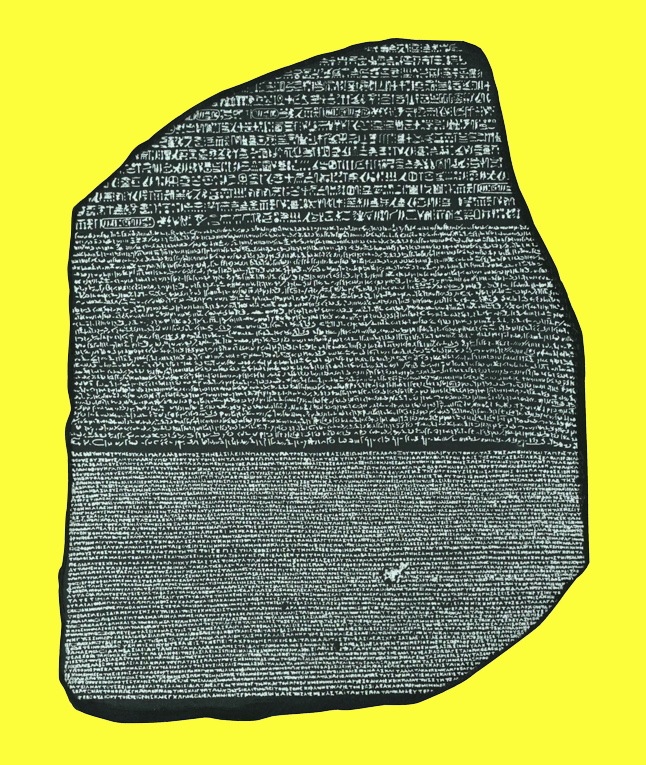 With $210,000,000 in sales last year, Rosetta Stone is far and away the best selling language learning product on the market today. But Rosetta Stone’s sales figures say more about the company’s marketing budget than the quality of their products.
A quick look around the web reveals a healthy mix of positive and negative feedback about the product, but there is a big problem with objectivity: the positive reviews tend to be from affiliate sites hoping you click the “Buy” link. Since I don’t sell Rosetta Stone, I figure I can provide an honest, objective review of the product.
Here are my impressions after sampling the free CD-ROM:
The Good
- Attractive & Intuitive: As you would expect from a company as large as Rosetta Stone, they offer a well-designed product with an attractive and intuitive interface. High quality images and sound prompts make the product easy to use.
- No translation: The grammar-translation method favored by many traditional schools and textbooks is not an effective way to learn a language and I was glad to see Rosetta Stone avoid this common pitfall. Users infer the meaning of new words through matching images and sounds in highly contextualized groupings.
- No overt memorization: Although you will “memorize” new words and phrases, Rosetta Stone focuses on sub-conscious internalization of a language, much like the way a child learns their native tongue. Their method mirrors what linguists call “The Natural Approach.”
- Spaced Repetition: As you go through a level, the same words are used multiple times in new sentences in progressively longer intervals. This helps speed up internalization and prolong retention.
The Bad
- Expensive: A complete set for one language (e.g. Rosetta Stone Spanish, including levels 1, 2, 3, 4 and 5) has a list price of $700!!! For that price, you could buy a plane ticket to the country where the language is spoken and get real immersion. Or you could buy premium online subscriptions to dozens of languages instead. (See my recommendations below)
- Repetitive: Although Spaced Repetition is effective, it can make the learning process a little boring. My advice is to supplement formal Spaced Repetition with “Narrow Listening” (i.e. listening to a variety of sources discussing the same topics.) This provides adequate repetition without boring you to tears.
- Requires sitting at a computer: The number one excuse for not studying a foreign language is “I don’t have the time.” My advice to busy people is learning on the go. Using an iPod or portable media player, you can listen to the target language while commuting, waiting in line, doing chores around the house, etc. But since you must be sitting at a computer to use Rosetta Stone, most people will probably not get in the required amount of daily input using their system.
My Verdict
If you have the money and the time, Rosetta Stone is a good choice. Many companies offer their employees subsidies to use Rosetta Stone, and even allow employees to study while at work. Check with your HR or management team to see if they will do the same.
But if you are low on money and time (as most people are), I would instead recommend Praxis Language, the creator of ChinesePod, SpanishPod, FrenchPod, ItalianPod and EnglishPod. The Praxis Pass provides access to premium features for all 5 languages at $39 a month. There is a free 7-day trial to get your linguistic feet wet.
Republishing This Article
Want to share this on your site or blog? You are welcome to republish any articles by John Fotheringham. For guest posts, you must seek permission from the post author. For John's articles, please include the following at the top and bottom of the article when reposting:
Copyright © 2010 by John Fotheringham. For more tips, tools, and tech for Mastering ANY Language, go to LanguageMastery.com
[...] original here: Review of Rosetta Stone language learning products By admin | category: Object, chinese | tags: around-the-web, middle, positive, rosetta, [...]
To your "The Bad" comments on having to sit at a computer. This is not true. Rosetta Stone comes with an Adio Companion disk that is able to be uploaded to your ipod or portable media player so you can learn and listen to the target language while you do other things such as commute, wait in line or do other chores.
Having used the software for a few months now I find it very easy to use and very portable.
I purchased Rosetta Stone last year and just want to take issue with one point. The software comes with an audio companion, which I listen to on my IPod when I work out. You don't have to be at the computer, although that part is more powerful.
@S DeLuca, @ Franklin,
Thank you for bringing this to my attention. The demo CD-Rom only showed the computer-based part of the system, so I was unable to sample the audio companion. It is good to know they have a mobile component.
I do wish, however, that they offered apps for the iPod Touch, Blackberry, Palm, etc. That way, you could utilize all of the core features even while away from your computer.
Rosetta Stone uses no English-language instruction—in fact, no instruction at all. There are no vocabulary lists, conjugation tables, or translation drills. Instead, it mimics language immersion by associating language with pictures. Rosetta Stone doesn't put it this way, but the program asks you to learn like a child.
Is this possible at all? I doubt. Rosetta Stone is better than other methods but still is rather ineffective because this approach does not change the habit of subconscious translation into the native language which in adults inevitably hinders formation of the new language speech center in the brain. In my opinion, the method that does not address explicitly the problem of cross-translation could not be successful.
To learn as a child you need tools that will give you a possibility to turn off the habit of cross-translation automatically and build a new language speech center in the brain starting from the first lesson. This concept is based on a scientific fact: adults who learn a foreign language and speak it fluently develop a new language speech center in the brain.
What concerns the Rosetta Stone Totale I agree that this program does a terrific job of immersing you in a language and may be the next best thing to living in a country, surrounded by native speakers. But the pricey Totale is not the ultimate answer to one billion of potential customers in the next 10 years. Here is why.
The Table contains statistical data for two web sites from Alexa:
Traffic Rank
18,708
3 month change 0.09%
Users from different countries:
66.2% United States
3.2% United Kingdom
2.9% Canada
2.1% India
2.0% China
1.7% Germany
1.2% Japan
1.2% Cambodia
1.1% Australia
1.0% Russia
1.0% Mexico
0.9% Pakistan
0.8% Israel
Age population mostly represented among Rosetta Stone visitors:
35-44(approx. one third)
55-64(approx. one fourth)
65+(approx. one third)
Conclusion: The pricey Totale program is designed and used mainly by professionals and college graduates in the USA who are interested in foreign languages, mainly as a hobby. Most visitors of Rosetta Stone web site connect from Home and Have a College degree.
The main contenders for the leading role in the Global economy (China, India, South Korea, etc.) are under-represented among visitors of Rosetta Stone web site, although namely these countries contain the major portion of one billion ESL learners who need fluency in ESL. Practical knowledge of ESL can be the deciding factor in finding a better job or getting a promotion. They need a modern method of learning ESL fast. Rosetta Stone is definitely not providing the answers to the vexing question how to learn ESL fast and cheap.
I bought RS to learn Korean. It was the most frustrating language studying experience I have ever had.
Because there are no explanations, I got to the point where I could answer all the questions up to a fairly high level WITHOUT ANY IDEA WHAT I WAS SAYING. A real problem is that Korean does not translate to German or English (my fluent languages) directly. This could be explained in many specific cases if explanations were allowed. For example, Korean has two counting systems. Suddenly, after learning some numbers in one system, we get different numbers. But why, when, where? There is not adequate background to figure this out. The speed of the speakers is too fast. The different phoneme systems (Korean vs. IE languages) are a real stumbling block. For example, until a Korean wised me up, I thought the difference between the words for red and blue were in the second consonant (r vs. l), where-as these are in fact just allophones of nominal significance to native speakers, and the real difference is between the two Ps.
The pictures are so ambiguous. I have no idea what well over 10% are teaching (e.g., with geometric figures there are too many independent variables: beside, smaller, touching, red, shape…?). The words for arm, leg and foot are quite similar to my ears and the pictures teaching those words often show at least two of those — in other words, the perfect NON-learning situations. Some of the pictures are difficult to "see" — there is a close-up of part of a horse's head, which I only could "see" after I'd learned the word for horse else-where (long after giving up on RS).
Another problem is that, according to Korean friends, the phrases / grammar used is not natural. No, it's not actually wrong; it's just not what a Korean would say (comparable, I suppose, to old-fashioned ESL books with stilted, unrealistic conversations). Here is an example that I noticed: Koreans rarely use plural forms (essentially only when it is necessary to distinguish between singular and plural), but RS makes a big point of teaching the plural marker — which was about the only thing I knew when I came to Korea, and dutifully used every-where (I rarely buy one apple, one pen etc.) to the consternation of the Koreans.
The Russian RS has problems as well. Russian varies depending as to who is speaking. This is apparently ignored, making for errors. (Since I haven't seen the Russian RS, I can't verify that this is sthe case, but I was told this by some-one familiar with it.)
[...] GIR Really Works: The audio CD presents the same vocabulary items and phrases in progressively longer intervals, refreshing your memory just when you are about to forget new terms. Using Pimsleur’s proprietary spaced repetition system, I was able to learn and retain new French and Russian terms far easier than when using other systems. And you know it works since it now is utilized in nearly all modern language learning systems, including Rosetta Stone. [...]
I tried to learn Russian with RS and persisted with it for about six months, after which time you'd expect to be able to have at least greet people and have a basic conversation. However level 1 of RS focuses on teaching you vocabulary and short phrases, and it would be quite a struggle to find contexts in which some of them could be used. Camels standing on three legs and clowns putting on their trousers are not things I often comment on, surprisingly enough.
Moreover, as Kim mentioned, the photos can be ambiguous and it's hard to be sure what some of the words and phrases are referring to.
Level 2 does appear to include conversations and perhaps they consist of the kinds of things you would talk about with Russian speakers, but would anyone have the patience and dedication to stick with the course for long enough to find out?
RS doesn't immerse you in the languages in the same way that children are immersed. There's no interaction with others, you can't ask questions, and you don't hear any conversations.
Good points all around, Sai.
With its use of spaced repetition and visual contexts, and avoidance of direct translation, Rosetta Stone has the potential to be a truly great product. But I agree that it falls short in many respects, and does not accurately recreate the child-like immersion environments needed to truly internalize new language.
I have plans to develop my own products someday that overcome these weaknesses, but this will have to wait until I have the financial backing to go toe-to-toe with the likes of Rosetta Stone…
Oh, also I wanted to mention that it might be worth revisiting for some people because it recently went through a major update.
When I first tried Rosetta Stone, it had no way to learn how to talk about yourself and you learned no useful greetings, etc. Also, you had to choose one focus (reading or listening or speaking) and do just that until you chose to switch.
These problems have all been fixed. It now introduces greetings and how to say things that are really useful as well as giving a blend of all different types of exercises.
I love Rosetta Stone. I've been using it to learn Hindi for almost a year and I have found that the vocabulary and sentence structures stick in my head so well that I dream about them or spontaneously think of a Hindi sentence in the middle of the day.
I love the motivation to move forward by gathering check marks for each lesson.
The milestones are frustrating at first, but I learned to accept a 50% score and then go back and try them again once I had moved to a later section.
The audio companion is not a substitute for the software, but it does do a great job reinforcing and it also uses no translation.
The no translation has been such a gift, as I've been able to understand the language on a different level, without filtering it through English.
Rosetta Stone was more than I could really afford when I bought it, but I paid it off bit by bit and I have no regrets at all about buying it (this was 3 levels because there is not yet a 4 and 5 for Hindi)
I always recommend to my friends who want to learn a language to try it out on their website and see if they like it before buying the whole thing (you can buy month to month).
I've since started using many, many other books and programs and resources, but Rosetta Stone is by far my favorite.